
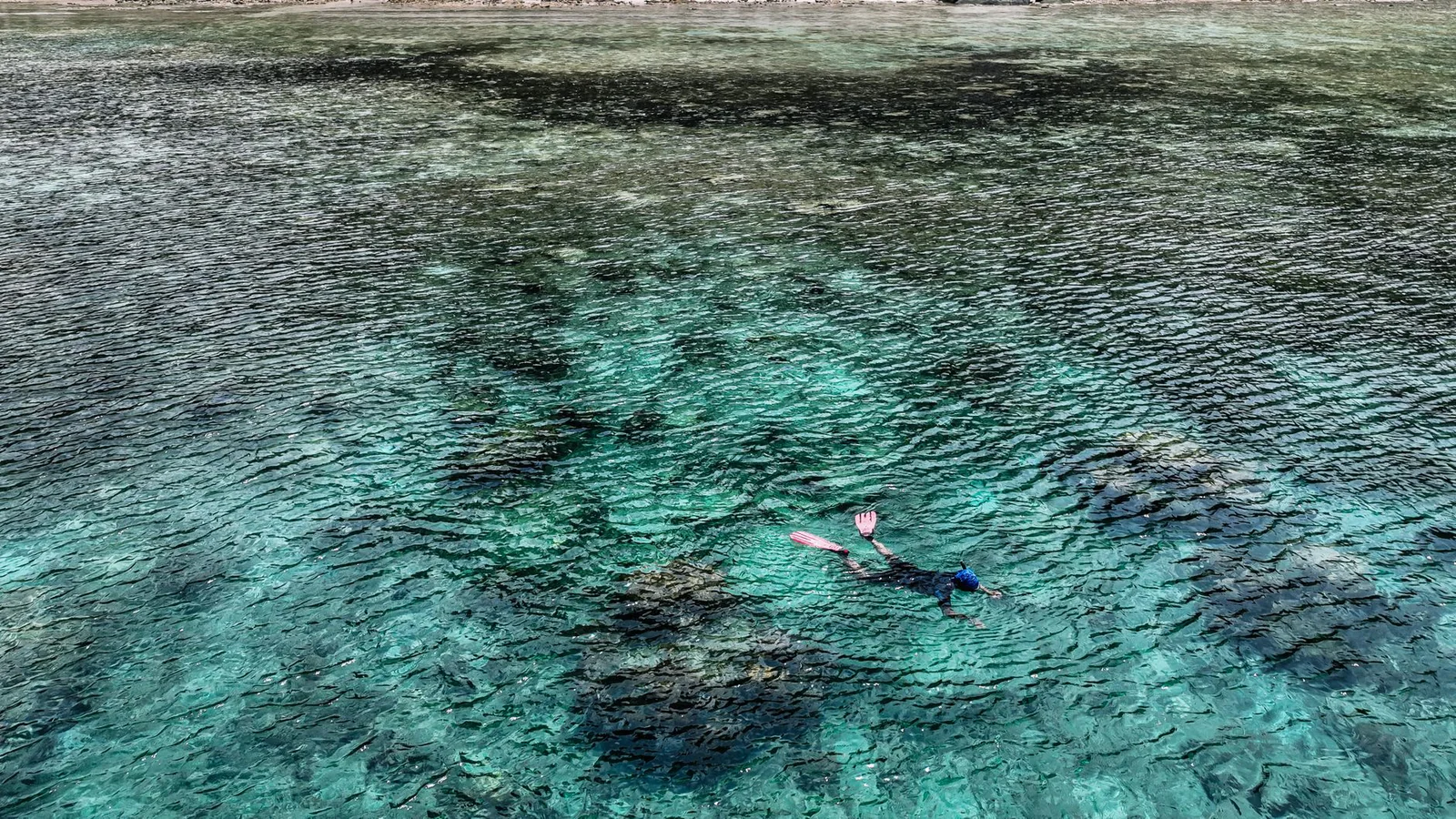
Floating into Blue Room Cave feels unlike snorkeling an open coral garden. Outside the rock wall, sunlit turquoise reefs drop steadily toward deep Caribbean blue; ten fin kicks later, you duck beneath a limestone brow and pop up inside a vaulted grotto where reflected light turns every bubble cobalt. Knowing exact water depth, fish species, buoyancy technique, and exterior reef corridors helps you read the site like a local guide rather than rushing blindly through in five minutes.
Essential Logistics & Takeaways
- Interior Depth: Expect 3 to 6 meters (10 to 20 feet) of clear water over pale coral sand and limestone rubble, with zero shallow standing platforms.
- Water Clarity: Exterior visibility routinely surpasses 20 meters (65+ feet) on calm days, letting light bounce cleanly off the seabed inside.
- Resident Marine Life: Thousands of shimmering silversides (copper sweepers), sergeant majors, blue chromis, and colorful reef fish along the outer wall.
- Reef Conservation: Keep fins clear of the wall; Curaçao reef protection rules forbid touching coral, sponges, or resting boots on underwater shelves.
Water Depth, Light Penetration & Interior Acoustics
First-time snorkelers often worry Blauwe Kamer might feel claustrophobic or pitch-black inside. Not even close! Once your head clears the low limestone threshold, the ceiling arches several meters high above the water, leaving plenty of fresh air circulation and room to float comfortably. Look straight down through your mask and you will see white calcareous sand mixed with smooth boulders resting 3 to 6 meters (10 to 20 feet) below your fins.
Because no shallow sandbars break the floor inside, you stay swimming or floating the entire time. Confident swimmers tread effortlessly in salty Caribbean water, whereas travelers who get winded quickly benefit enormously from wearing an inflatable snorkel belt or standard boat flotation vest. Honestly, dropping down into a vertical float with a noodle lets you tilt your head back and watch cobalt ripples dance across the damp limestone ceiling without burning leg strength.
Notice the acoustics too! Inside the cavern dome, gentle wave pulses echo softly against wet pockets in the fossilized reef wall, and voices carry much louder than you expect over open sand. When three boat groups arrive near peak midday light, that echo amplifies splash noise considerably. Swimming in slightly before 11:00 AM or right after 1:30 PM rewards you with quiet acoustic calm alongside intense azure beams.
One common surprise for first-time visitors is water temperature inside Blauwe Kamer. Even under the shadowy limestone ceiling, Curaçao’s Caribbean Sea hovers comfortably around 26 to 29 degrees Celsius (79 to 84 degrees Fahrenheit) year-round. You feel zero icy thermal shock stepping out of sunbeams into the shaded room. Most swimmers wear nothing thicker than a thin UPF swim shirt and shorts, saving bulky neoprene wetsuits strictly for deep multi-tank scuba charters further down the coast. Still, floating calmly for 25 minutes without kicking vigorously can cool your core subtly if a breeze blows across the cavern air pocket, so bring a dry towel back on deck or on shore!
Passing the Submerged Threshold Step by Step
Getting from bright sun into the cave room takes calm breathing rather than athletic diving skills. Follow a simple three-step approach regardless of whether you arrived via boat excursion or swam along the cliff from Boka Santu Pretu:
- Scout the Surge Outside: Pause 4 to 5 meters off the entrance brow and watch three consecutive wave sets. If water level stays steady without slamming upward against the stone overhang, signal your swim partner and line up facing the widest gap. Check our swell safety thresholds before kicking forward.
- Low-Tide Float vs. High-Tide Duck-Under: At low tide, tilt your chin slightly up, exhale lightly, and glide straight under the air pocket while watching the rock edge through your mask. When high tide narrows or submerges the opening, take one unhurried breath, bend slightly at the waist to angle downward roughly 1 meter (3 feet), and take two smooth frog or flutter kicks horizontally for 1 to 2 meters (3 to 6 feet). Keep one hand lightly extended above or ahead without pushing off sharp barnacles; you pop straight back up into open cavern air before needing another breath!
- Clear the Exit Lane Immediately: Novice snorkelers often stop floating directly inside the threshold to cheer or adjust masks, blocking incoming swimmers behind them. Kick three meters further into the wide central dome first, clear your snorkel, and check your surroundings.
What Wildlife Lives Inside vs. Outside the Arch
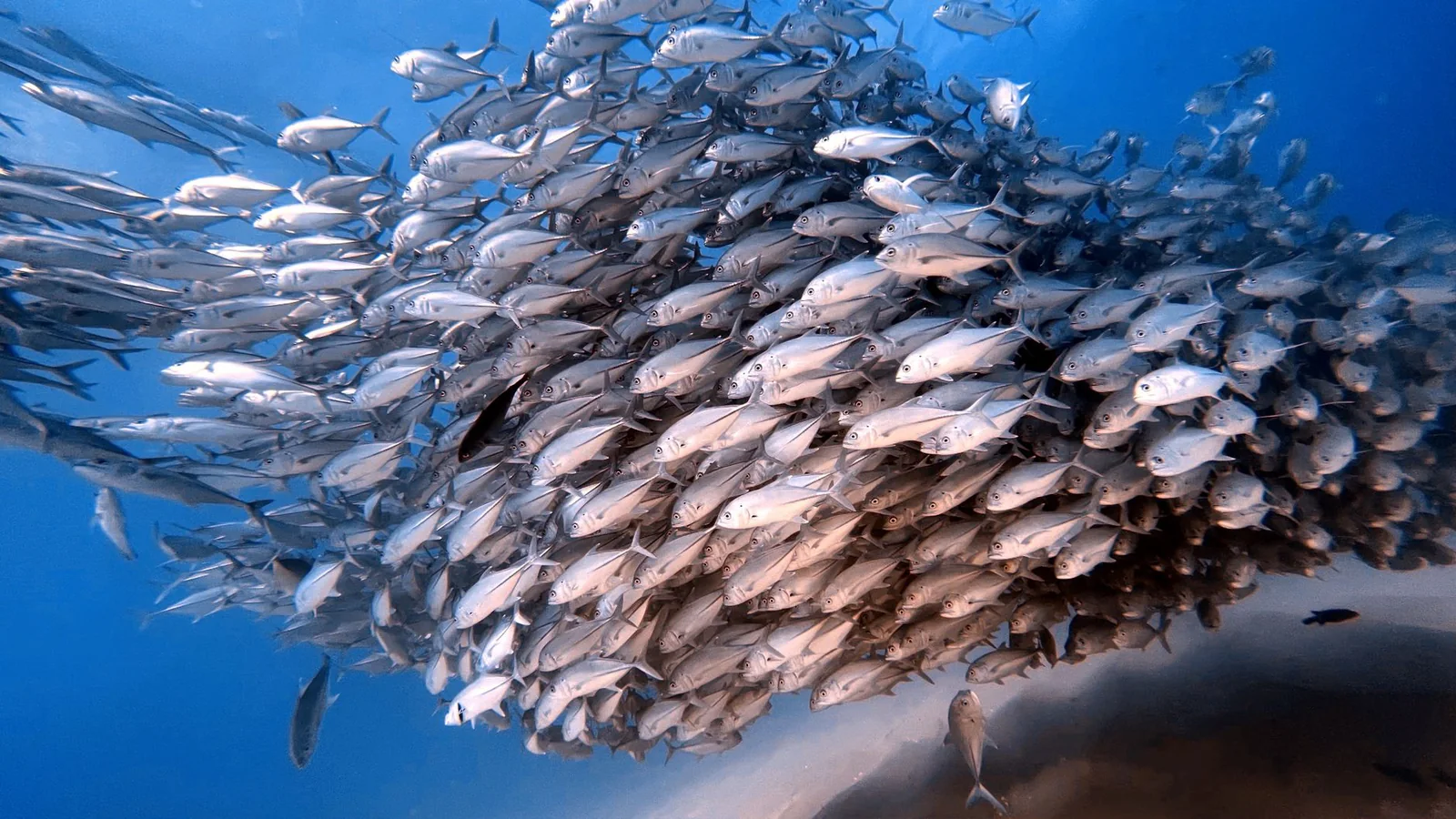
Many guides focus solely on the blue light show and forget to point out the wildlife sheltering right beneath visitors’ fins. Inside the semi-shaded perimeter, vast shimmering schools of tiny silversides and copper sweepers pack tightly together in shadowy overhangs, parting like silver curtains whenever a snorkeler glides gently past. When overhead midday beams slice across the entrance floor, those fish flash bright metallic silver against neon cobalt! You will also spot sergeant majors patrolling shaded pockets and small squirrelfish or glassy sweepers hiding beneath larger floor boulders.
Once you have floated twenty minutes inside the grotto, exit calmly back out into daylight and turn either north toward Playa Santa Cruz or south along the main cliff wall. Here, sunlight fuels vigorous coastal reef life just meters from the cliff:
- Stony & Brain Corals: Massive boulder star corals and grooved brain coral heads cling right to the limestone shelf between 2 and 8 meters deep.
- Reef Grazers: Blue tangs, stoplight parrotfish, yellowtail snappers, French angelfish, and banded butterflyfish cruise constantly along the vertical drop-off.
- Sponges & Tube Worms: Bright purple stove-pipe sponges and feathery Christmas tree worms dot shadowed overhangs where boats never anchor.
Just watch your buoyancy whenever photographing along the cliff wall! Even a mild surface ripple pushes careless knees sideways into fire coral (Millepora) encrusted on sunny vertical ledges. Wearing a thin long-sleeve rash guard and holding short travel fins clear of shallow rock heads protects both your skin and slow-growing Caribbean coral colonies. (Look through our packing and gear notes for mask defogging tricks and dry bag advice.)
Why Boats & Dive Teams Treat Blauwe Kamer Differently
Although scuba operators across Curaçao love western boat routes (such as Mushroom Forest and Watamula further northwest), Blue Room Cave itself functions overwhelmingly as a snorkeling stop rather than a deep scuba cave dive. Exhaust bubbles rising from open-circuit scuba tanks bounce violently against the shallow cavern dome, stirring sediment and temporarily breaking the glassy water mirror effect from underneath. Furthermore, carrying heavy aluminum tanks and BCD valves through a tight 1-meter-tall tide threshold risks scraping equipment and fragile ceiling formations alike.
Instead, scuba charters frequently drop divers along deeper coral slopes 50 to 100 meters outside Santa Cruz or nearby Santa Martha Bay, while snorkel trips like the 2-hour Santa Martha boat excursion ($54 / ~€50) or 5-hour cave and turtles boat trip ($98 / ~€90) anchor cleanly outside the entrance shelf so swimmers explore the dome weightlessly from the surface. If someone in your travel group prefers staying on the boat deck with binoculars or struggles in open water, verify ahead of time whether your boat captain offers shaded deck seating while stronger swimmers enter the grotto. Alternatively, pairing an adventurous hike with a boat pick-up is outlined step-by-step in our hike vs. boat comparison, and if you want guaranteed calm shallow wildlife alongside your cave day, read how most visitors pair Blue Room Cave with Playa Piskado sea turtles and Grote Knip.
Practical Swim Recovery & Post-Cave Routine
After swimming back out through the doorway, pause a moment treading calm open water 10 meters clear of the rocks so you don’t drift sideways onto cliff crevices while checking boat positions. Look for moored charters flying bright dive flags, swim back up the stern boarding ladder carefully (avoiding props completely until engines are verified off), and rinse salt crystals out of your mask promptly. Independent hikers swimming back toward Boka Santu Pretu should hug the rocky coastline tightly within 15 to 20 meters of shore where swells stay milder and water depth averages 4 to 8 meters rather than drifting out into open current lanes. Drink fresh water right back on the beach, check skin for tiny urchin spines or coral scrapes, and keep reef-safe lotion ready for the sunny return leg.
Traps, Restrictions & Tourist Realities
- Standing or Grabbing Limestone Walls: There are zero smooth steps inside Blauwe Kamer; resting hands or bare heels on wet wall pockets almost guarantees sharp barnacle cuts or sea urchin spines.
- Blocking the Narrow Entrance Arch: Never hover right in the low doorway adjusting straps or snapping selfies while other swimmers are mid-breath ducking underneath behind you.
- Kicking Above Shallow Outer Coral: Dropping vertical bicycle-style fin kicks over 1.5-meter reef ledges outside the cliff breaks fragile corals; keep knees straight and kick horizontally near the surface.