Every traveler chasing western Curaçao eventually hears rumors about a half-hidden coastal grotto where seawater turns neon cobalt under overhead sunlight. Known locally as Blauwe Kamer (or Boka Fluit), the Blue Room Cave sits carved into fossilized coral cliffs just south of Playa Santa Cruz along the Banda Abou shoreline. There is no admission ticket booth, no paved stairway down to the waterline, and no lifeguard watching the entrance. How smoothly your morning unfolds depends entirely on picking the right access route for that day’s sea swell, arriving near midday solar alignment, and packing the right footwear and dry gear before driving 45 minutes northwest of Willemstad.
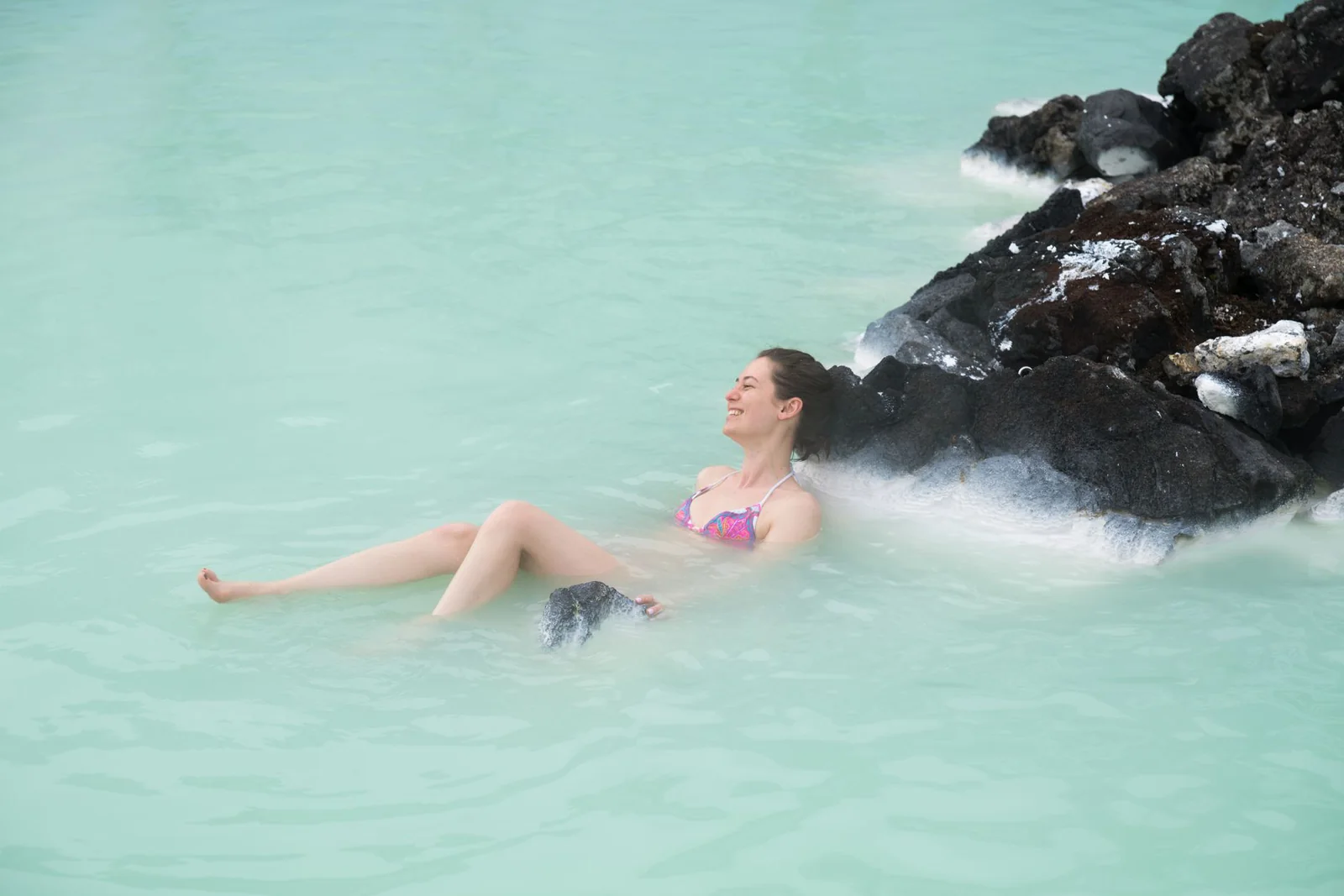
Coastal limestone sea cave mouth glowing bright turquoise in clear tropical water.
· Photo: Francesco Ungaro (Pexels License)
Live Date & Seat Availability
Check Blue Room Cave Tour Availability & Instant Booking
KEY TAKEAWAYS
Essential Logistics & Takeaways
Admission Fee:Free ($0 USD) natural coastal cave; you pay only for boat charters ($54 to $220 USD / ~€50 to €202), Playa Santa Cruz water taxis ($22 to $40 USD cash), or self-drive gear.
Exact GPS Coordinates:Blue Room Cave (12.29723, -69.15537), Playa Santa Cruz Trailhead (12.30614, -69.14523), and Santa Martha Harbor (boat departure base 10 to 11 km southeast).
Peak Glow Window:11:00 AM to 2:00 PM under clear sun; early mornings stay flatter yet noticeably dimmer inside.
Water Depth & Entry:3 to 6 meters (10 to 20 feet) deep inside with zero standing ledges; low tide often leaves air headroom, while high tide requires a brief 1-meter underwater duck-under.
Critical Safety Rule: Never swim in during western swells or breaking foam, and wear thick-soled reef shoes if hiking past Boka Santu Pretu.
Top Tours & Access Charters Compared
Comparing verified operators before leaving Willemstad saves wasted beach drives when winds shift or afternoon boats fill up. Check our top four benchmarked sea and land tours below, or open the complete tickets and tours directory to browse 13 verified Curaçao itineraries with 24-hour mobile cancellation.
INDEPENDENT OPERATOR BENCHMARKS
Blue Room Cave: Top 4 Tours & Tickets Compared
Benchmarked by verified pricing, duration, departure point, and cancellation flexibility.
Best Value
★ 4.8 (30)GetYourGuide
Curacao: Blue Room Cave Snorkeling Tour with Snacks
Blauwe Kamer owes its signature neon glow to geology and sunlight angles rather than artificial lamps or glowing algae. Curaçao’s rugged leeward coast formed out of uplifted marine coral reefs millions of years ago, leaving thick porous limestone terraces honeycombed with waterline notches. As coastal waves hollowed out an airy dome above sea level, the main rocky entrance overhang remained partially submerged.
Around noon, overhead sunbeams stab straight down through transparent Caribbean water (where visibility outside the cliff often passes 20 meters / 65+ feet), strike bright pale sand and coral rubble resting 3 to 6 meters down on the seabed, and bounce upward under the limestone brow. Water absorbs warm red and orange light within yards, sending pure electric cobalt bouncing across wet cavern stone and silver fish schools inside. Honestly, seeing that contrast for the first time, stepping out of glaring tropical sun beneath a dark stone lip only to surface inside a glowing blue dome, stays etched in memory far longer than ordinary beach stops.
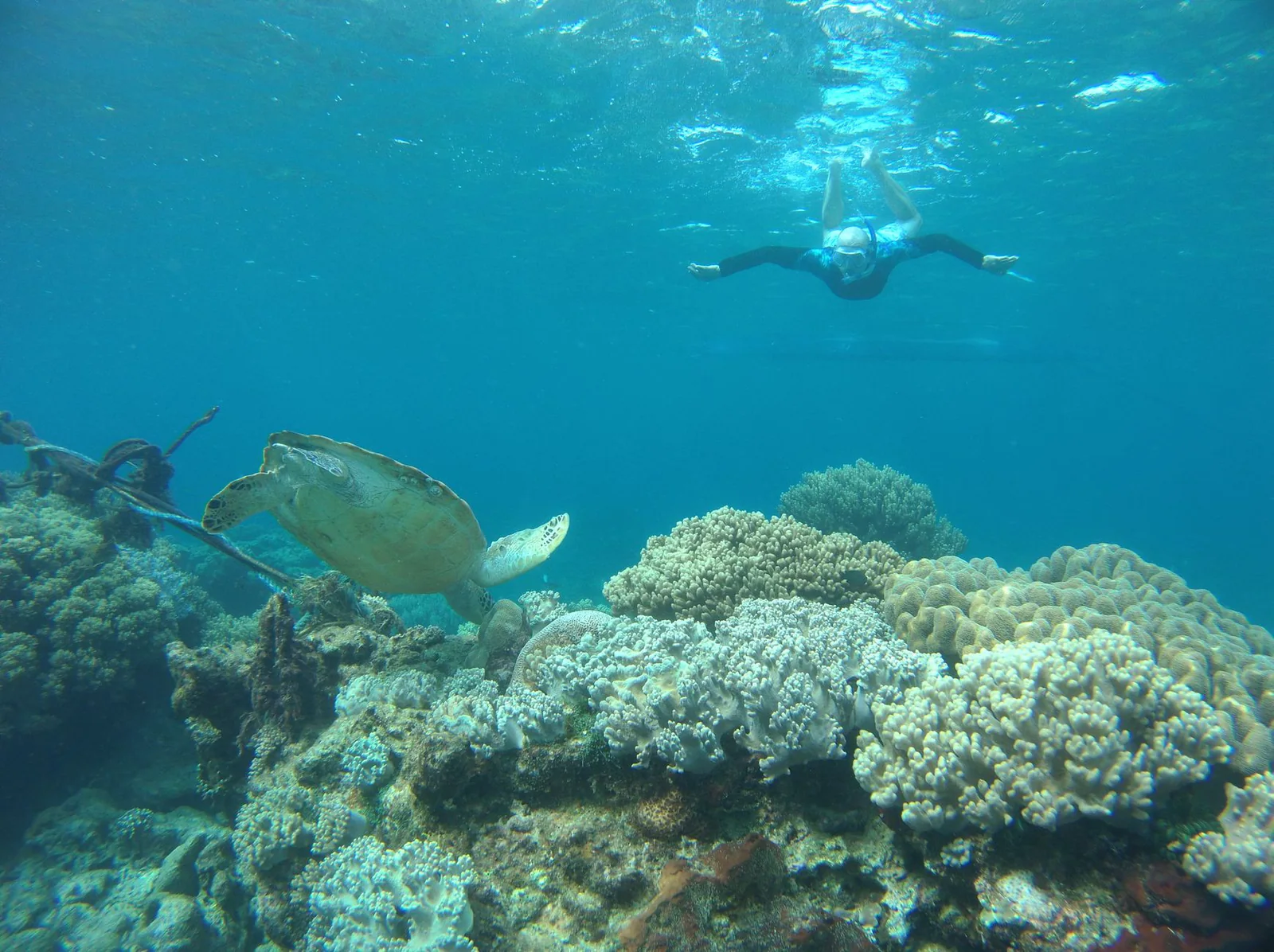
Why don’t swimmers feel cold or cramped inside? Even beneath the shaded rock roof, ocean water stays comfortably around 26 to 29 degrees Celsius (79 to 84 degrees Fahrenheit) year-round, and the arched dome rises several meters above sea level with fresh air flowing freely from outside. Inside the semi-dark perimeter, dense shimmering curtains of tiny silversides (copper sweepers) and sergeant majors weave past pale sunbeams, while healthy star corals, purple sponges, parrotfish, and tangs line the bright vertical cliff shelf right outside the mouth.
Want to know how fish, acoustics, water temperatures, and light pockets behave minute by minute once you cross the arch? Read our dedicated snorkeling and depth guide before pulling on your mask, and cross-reference solar angles with local tidal charts in our best time and sunlight breakdown.
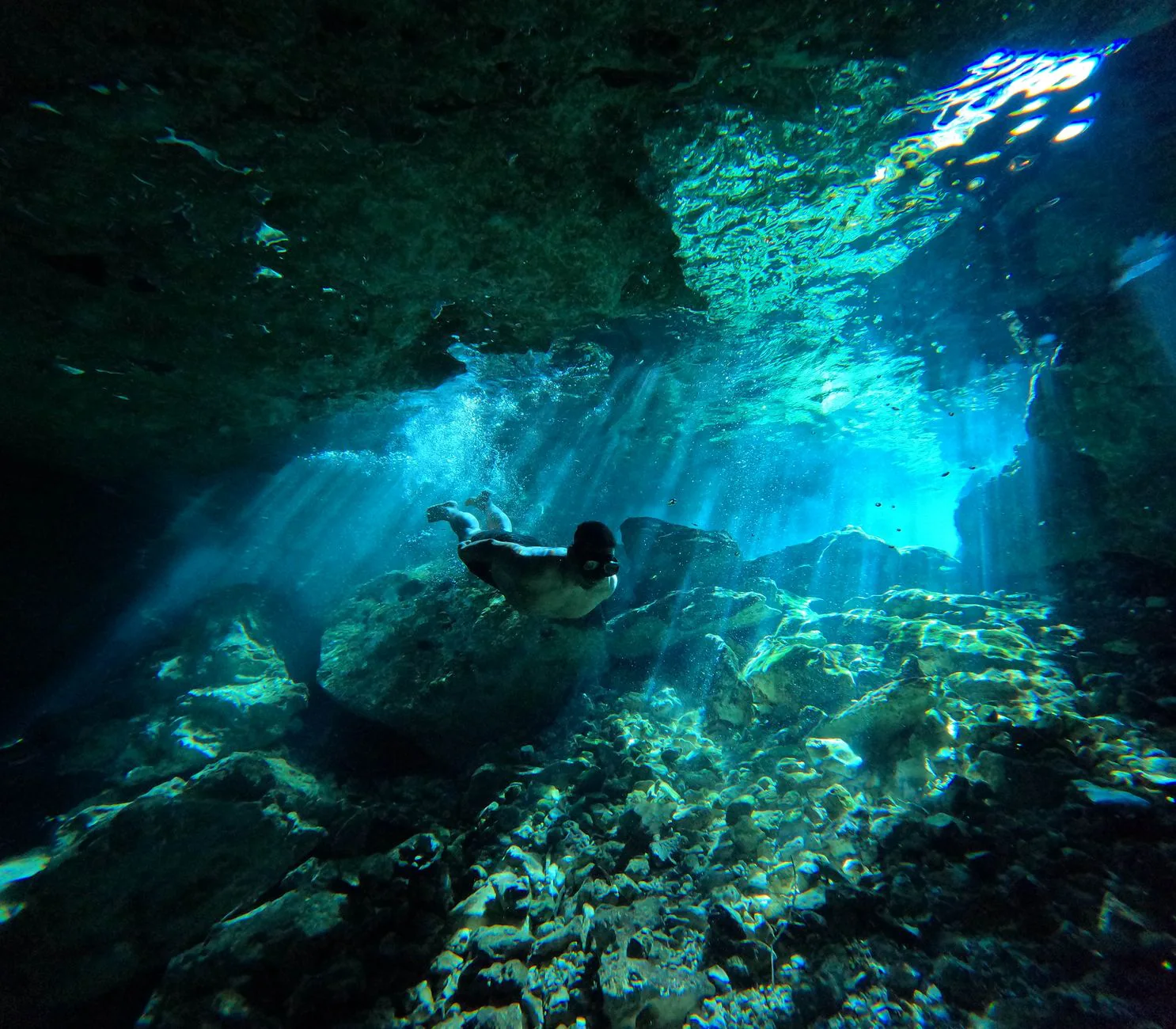
Bright sunlit turquoise water shimmering inside rocky tropical sea inlet.
· Photo: ArtHouse Studio (Pexels License)
Four Ways to Reach Blue Room Cave: Boat vs. Water Taxi vs. Hike vs. Kayak
Half the travel blogs describing Blauwe Kamer gloss over how drastically effort and injury risk vary between entry routes. Read our side-by-side hike vs. boat access comparison in full before choosing, or review the honest trade-offs below:
Guided Boat & Snorkel Charters ($54 to $185 USD / ~€50 to €170): Boats departing Santa Martha Harbor (2h cave snorkel at $54 / ~€50, or 5h cave + sea turtles + pizza at $98 / ~€90) or speedboats out of the Willemstad corridor drop guests straight into calm water 15 meters outside the cave entrance. You skip sun-baked cliff trails altogether, receive fitted snorkel masks and flotation vests, and benefit from a captain checking surge height before anyone steps down the boarding ladder.
Playa Santa Cruz Water Taxis ($22 to $40 USD / 40 to 72 ANG cash): Already drove out to Playa Santa Cruz and want a quick ride without committing half a day? Local boatmen operating near the south dock run short skiff shuttles Tuesday through Sunday (commonly clustering runs around 1:00 PM and 3:00 PM, Mondays typically off). Bring crisp small USD or ANG bills, inspect life jackets on shore, and remember walk-up departures depend on daily weather and beach headcount.
Coastal Hike + Open-Water Swim ($0 Free): Starting beside the beach restaurant at Playa Santa Cruz and Boka Santu Pretu, hikers cover roughly 1.5 to 2.0 kilometers (0.9 to 1.2 miles) across exposed jagged limestone (30 to 60 minutes each way, zero shade). Halfway along, Boka Santu Pretu offers a dark-sand cove where strong swimmers enter cleanly for a 15-minute (500 to 700m) swim along the reef wall, whereas pushing up onto the cliff directly above the cave forces a tricky, scrape-prone vertical rock climb down to breaking water.
Guided Kayak & Off-Road Jeep Hybrids: Calm mornings let kayakers paddle 15 to 20 minutes from Santa Cruz to tie off outside the arch while taking turns swimming under. Alternatively, travelers wanting rugged Banda Abou coastal tracks without baking on foot can book Sully’s 5.5-hour Jeep Wrangler adventure ($220 USD / ~€202) covering shipwreck snorkeling at Playa Santu Pretu, Blauwe Kamer, and a chef-prepared meal.
Think carefully about which route matches your group’s weakest swimmer rather than your strongest adventurer. If anyone feels uneasy treading deep water or scrambling sharp rocks in wet sandals, spending $54 (~€50) per person for a short boat ride from Santa Martha turns a stressful cliff trek into a relaxed two-hour coastal highlight. Conversely, experienced outdoor swimmers already renting a car out west often enjoy the desert coastal walk past cacti and sea cliffs before slipping quietly into calm morning water at Boka Santu Pretu.
How to Get to Playa Santa Cruz & Santa Martha Bay
Getting out to Banda Abou demands solid transport math whether you stay in Willemstad resorts, dock on a cruise ship at Otrobanda Mega Pier, or rent a cottage near Westpunt. Plan your transit cleanly using our getting there guide:
Rental Car (Most Flexible, $45 to $65 USD/day): Follow Weg naar Westpunt northwest past CUR Airport, Tera Kora, and Soto for 40 to 55 minutes (32 to 38 km). Free parking waits right behind Playa Santa Cruz sand (12.30614, -69.14523). Never leave backpacks, rental paperwork, or electronics visible inside parked cars; keep car keys and cash inside a floating dry bag worn while swimming, and top off fuel before passing Tera Kora since west-coast gas stations stay sparse.
Public ABC Bus (Lowest Cost, ANG 2.50 / ~$1.50 to $2.00 USD): Routes 3A (via Soto) and 3B (via Barber) depart Otrobanda Bus Terminal in Willemstad roughly every 1 to 2 hours (fewer runs Sundays and holidays). Buses drop passengers along the main village road rather than down at the bay, adding a warm walk before the trailhead. Confirm schedules on the ABC Curaçao app (autobusbedrijf.com) or WhatsApp (+5999) 724 4222.
Regulated Fixed-Rate Taxis (No Meters, $60 to $90 USD One Way): Licensed cabs carry “TX” plates and charge government zone rates for up to 4 passengers (25% surcharge for 5+ riders or late night). From Hato Airport (CUR) to Santa Cruz runs roughly $60 to $75 USD (~€55 to €69); from Willemstad cruise terminals to Westpunt/Santa Cruz runs $60 to $90 USD (~€55 to €83). Always lock in a return pickup window or hourly waiting agreement upfront, as empty cabs rarely cruise west-coast coves.
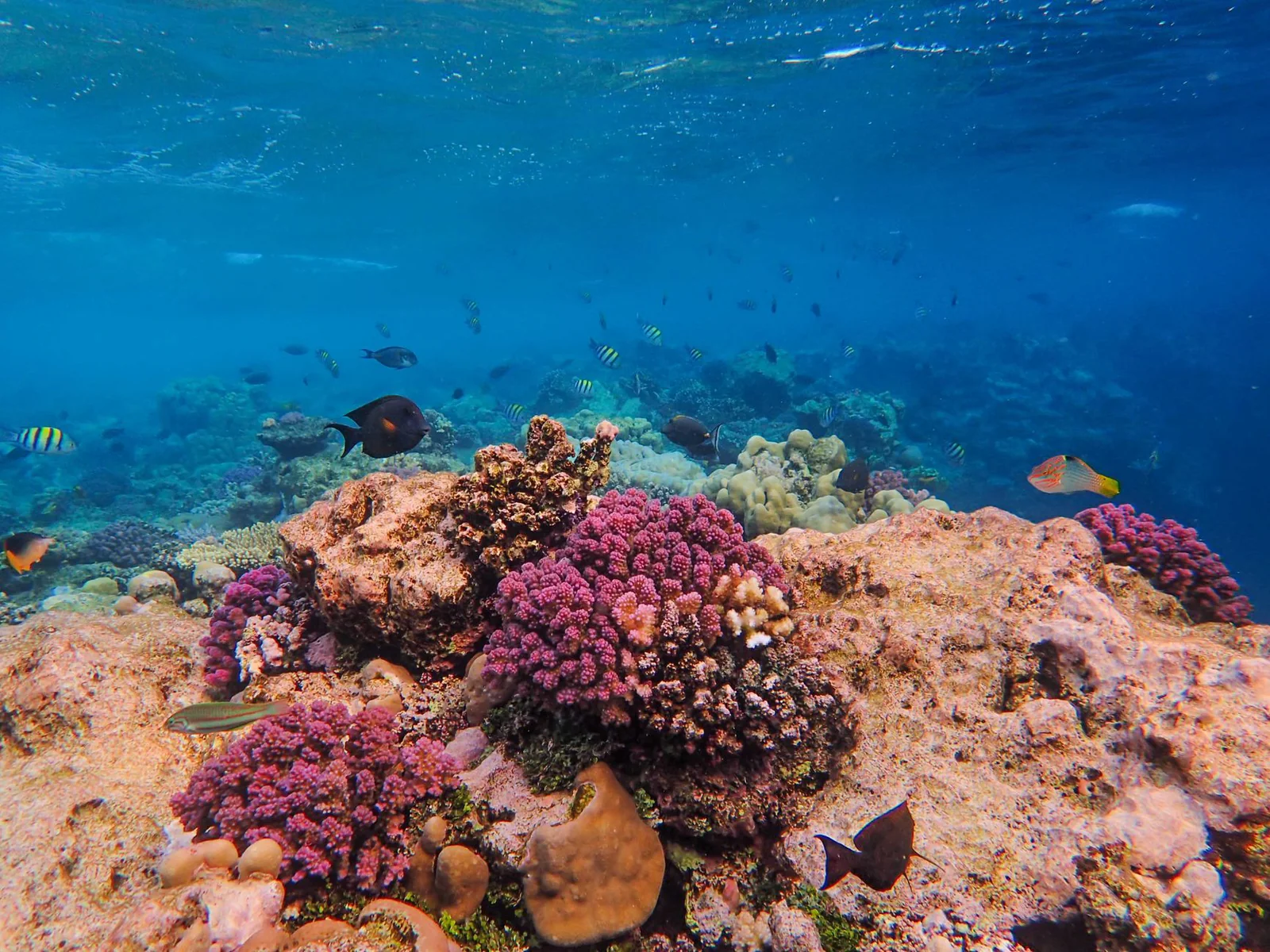
Healthy hard coral formations and reef fish under bright Caribbean water.
· Photo: Francesco Ungaro (Pexels License)
Never assume calm morning weather in downtown Willemstad guarantees safe entry out on the western cliffs! Even small passing Caribbean swells amplify dramatically when funneled inside Blauwe Kamer’s low limestone opening. Before kicking a single meter toward the rock wall, watch three consecutive wave sets for sixty seconds and read our full safety and sea-swell guide:
Low Tide vs. High Tide Threshold: Curaçao tides vary mildly (roughly 30 to 50 cm), yet that small swing sits right across the cave’s stone threshold. At low tide on glassy mornings, swimmers glide straight through keeping chin and mask above water. At high tide, expect to take one calm breath outside, kick down 1 meter (3 feet) while watching the stone lip through a clear dive mask, and swim 1 to 2 meters (3 to 6 feet) forward before popping up inside the cavern air pocket.
When to Turn Back Immediately: If wave surges seal the doorway completely, crash white foam up against the stone brow, or turn interior sand murky gray, abort at once! Inside a narrow stone grotto, rising waves slam floaters upward against jagged limestone ceilings. Seasonally, steady easterly trade winds from January through August shelter the southwest shore well, whereas September through November occasionally flip winds westerly or southerly and trigger 1-to-3-day swell closures.
Zero Standing Room: Floor depth runs 3 to 6 meters (10 to 20 feet) throughout the room. Wear a snorkel vest or noodle if treading deep water tires your legs, and never grab sharp barnacle-coated ledges to rest.
Emergency Numbers: Save 911 (Police/Fire), 912 (Ambulance), 913 (Curaçao Coast Guard Maritime Rescue), 917 (Non-Emergency Police), 9247 (Roadside Assistance), and +5999 745-0000 (Curaçao Medical Center) in your phone before driving west.
Packing five simple items turns a tricky coastal trip smooth: thick-lugged closed-toe water shoes (never thin rubber flip-flops on sharp trail karst), a personal silicone mask with reef-safe defogger, a 5L to 10L roll-top waterproof dry bag double-sealing electronic key fobs, a long-sleeve UPF swim shirt with zinc mineral sunscreen, and a wrist-tethered action camera set around -0.7 EV for shadowy dome lighting without using harsh underwater flash. Review full camera settings, silica anti-fog strips, and key-fob protection in our gear and photography guide.
Pairing Blue Room Cave With Sea Turtles & Grote Knip
Hardly any visitor drives 50 minutes out to Banda Abou solely for one 25-minute cave swim. Within twenty minutes north of Santa Cruz sit two of Curaçao’s most rewarding coastal stops, easily linked via a 5-hour boat charter ($98 / ~€90) or an early-morning self-drive circuit (outlined hour by hour in our turtle snorkel and Grote Knip itinerary):
Playa Piskado (Playa Grandi): Walk straight off this active Westpunt fishing beach to swim beside wild green sea turtles attracted by fishermen cleaning daily catch at the wooden pier. Hit Piskado early (8:30 to 9:15 AM) before tour buses crowd the bay, wear water shoes over shoreline pebbles, keep clear of active fishing skiffs and lines, and stay 2 meters away without ever touching or feeding protected turtles.
Grote Knip (Playa Kenepa Grandi): Five minutes south of Piskado, park free atop the iconic cliff overlook above dazzling turquoise water and powdery white sand. Snack shacks, cold smoothies, restrooms, and rented loungers let you recover comfortably after morning snorkeling before cruising back south past the free flamingo viewing flats at Sint Willibrordus toward Willemstad. Or drop by quieter Kleine Knip five minutes down the lane if weekend beach crowds pick up!
Practical Timing Checklist for a Stress-Free Morning
Want a clean sequence that avoids crowded boat arrivals and afternoon wind? Schedule your Blue Room Cave excursion early in your Curaçao trip so you retain weather flexibility if temporary swells roll in. For boat riders, look for late-morning shoulder trips hitting the grotto right around 10:45 AM to 11:15 AM or early-afternoon slots near 1:30 PM, catching bright overhead blue refraction just outside the busiest noon fleet overlap. Self-drivers starting at Playa Piskado at 8:30 AM arrive comfortably at Santa Cruz by 10:15 AM, wrap up inside Blauwe Kamer before noon chop builds, and spend unhurried afternoon hours relaxing at Grote Knip with zero backtracking!
Interactive Map: Blue Room Cave, Trailhead & Departure Bays
Verify where Playa Santa Cruz (12.30614, -69.14523), Boka Santu Pretu, Santa Martha Harbor, and Blue Room Cave (12.29723, -69.15537) sit relative to one another before setting off down Weg naar Westpunt.
Blue Room Cave: Location & Access Map
Blue Room Cave (Blauwe Kamer): Sea cave entrance accessible by boat, kayak, or swim (12.29723, -69.15537)Playa Santa Cruz Trailhead: Free beach parking, water-taxi dock, and coastal footpath start (12.30614, -69.14523)Boka Santu Pretu: Dark-sand cove halfway along the coastal trail; 15-min swim entry when calmSanta Martha Bay (Soto): Primary departure harbor for short 2h & 5h guided cave boat tours
RED FLAGS & WHAT TO AVOID
Traps, Restrictions & Tourist Realities
Chasing “Guaranteed Cave Entry” Hype: Weather and coastal swell run the show at Blauwe Kamer; steer clear of street vendors or informal operators promising cave entry regardless of wave height.
Hiking Without Thick-Soled Shoes or Water: Thin resort flip-flops snap quickly on jagged karst cliffs, and zero natural shade covers the 1.5 to 2 km Santa Cruz footpath under equatorial afternoon glare.
Leaving Rental Bags Visible in Beach Lots: Strip seats clean before pulling into Playa Santa Cruz or Grote Knip parking turnouts; haul electronic car fobs inside a double-sealed dry bag while swimming.
Frequently Asked Questions
Guided boat tour ($54–$98) vs free Playa Santa Cruz coastal hike — which should you choose?+
Choose a guided boat tour ($54 USD / ~€50 for 2 hours from Santa Martha, or $98 USD / ~€90 with Playa Piskado sea turtles and pizza) if you want zero cliff scrambling, fitted snorkel vests, and safe captain swell checks. Choose the free Santa Cruz hike (1.5 to 2 km) only if every swimmer wears closed-toe reef shoes, carries a waterproof dry bag, and swims comfortably in 3-to-6-meter ocean water.
What time of day shows the brightest blue glow inside Blue Room Cave?+
Aim to be inside the cavern between 11:00 AM and 2:00 PM under bright clear sun. Overhead Caribbean sunbeams plunge straight down through clear water outside the cliff wall and reflect off white seabed sand, illuminating the dark dome ceiling in electric cobalt blue.
Do I have to scuba dive or hold my breath long to enter Blauwe Kamer?+
No scuba gear is needed, and snorkeling beats diving because exhaust bubbles disrupt the surface mirror. At low tide on calm days an air gap stays open above water; at high tide you simply take one calm breath and duck roughly 1 meter (3 feet) down for 1 to 2 meters horizontally through a brightly lit underwater threshold.
Can you get to Blue Room Cave by public bus or taxi without renting a car?+
Yes, though timing takes care. ABC Bus routes 3A and 3B from Willemstad’s Otrobanda terminal reach Santa Cruz village for ANG 2.50 (~$1.50 USD) every 1 to 2 hours. Fixed-rate TX taxis cost $60 to $90 USD (~€55 to €83) one way from Willemstad, so travelers without rental cars usually save money booking a tour with hotel or cruise port pickup.
When is Blue Room Cave unsafe or closed to swimmers?+
Blue Room Cave has no gates, yet high coastal swells (most often seen during wind shifts in September through November) turn the submerged arch dangerous by pushing swimmers upward against jagged limestone ceilings. Always abort if waves slap the cave brow or churn white foam inside.
 Best Value

 Speedboat Access
 Top Rated
 Jet Ski Adventure